LSSL 5360 Textbook Chapter 3: Literary Elements
What did I already know about the topics?
K: In regards to literary elements, I believe that they give us a language to talk about literature and to be able to understand each other as we explore ideas, analyze, and critique. I have a basic understanding of the commonly used terms and most of my experience utilizing them is in conjunction with young adult or adult literature.

What did I learn after I completed each assignment?
W: With the resources provided, I was able to compile a short, working definition of the terms listed to review.
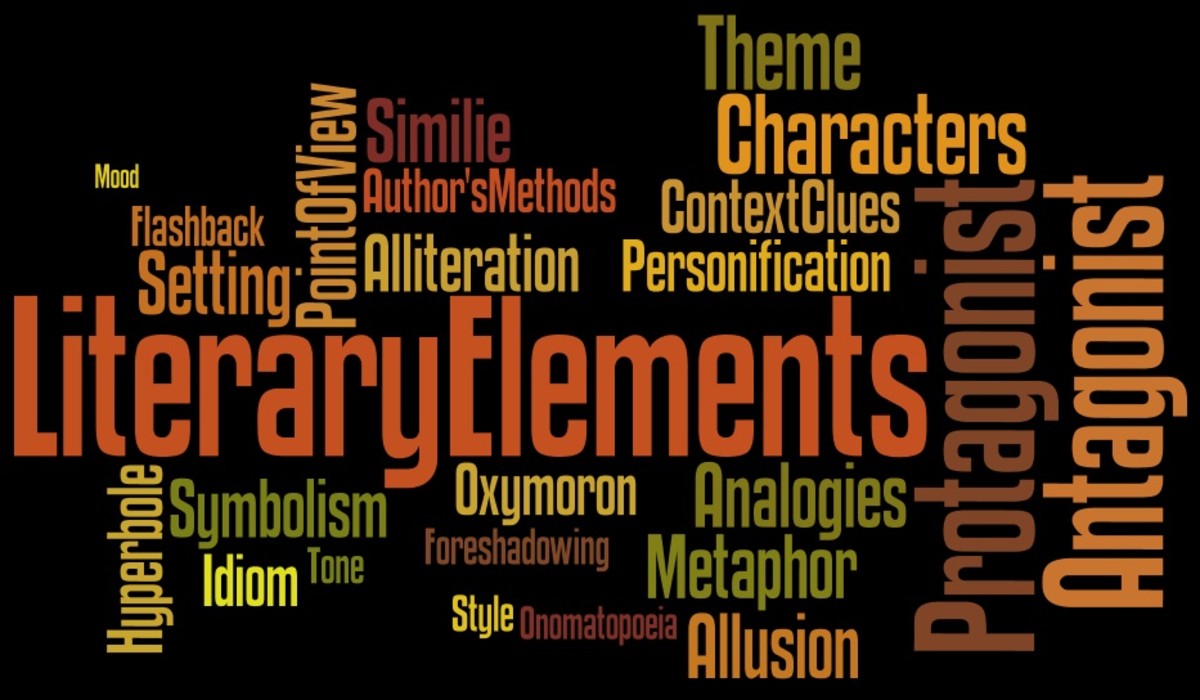
Literary Elements:
- Antagonist-the opposition to the protagonist, whether a single person, group, force of nature, or even some weakness of the protagonist himself
- Character-a person, figure, or object in a story
- Conflict-the problem, whether internal or external, that makes achieving the protagonist's goal difficult
- Mood and Tone-the emotional atmosphere of a story along with how the author feels about the subject which contribute to the overall experience of a work
- Plot-the order of events in a story that may have noticeable pattern
- Protagonist-the central character in a story
- Setting-the time,place, and mood of a story that give a reader an understanding of the "where, when, and circumstances"
- Themes: the message or messages from an author that can be supported by the text and applied to a person's life or the real world
Literary Devices:
- Allegory-a device that gives bigger meaning through easier to relate to metaphors
- Allusion-a reference to a place, event, or literary work in a piece of literature that helps make connections and share an author's idea
- Archetype-a reference to a well-known idea or person to get a meaning across easily
- Deus ex Machine-a resolution to a story's conflict by an improbable solution
- Hyperbole-an exaggeration to add an effect that is typically not realistic
- Imagery-how the author utilizes descriptive techniques to appeal to the readers senses whether physical (smell, touch, taste, hear, see) or intellectual with metaphors, allusions, etc.
- Metaphor-a comparison between two objects to link them by a shared characteristic
- Motif-an always present or repeated idea or them in a work
- Point of View-who tells the story and how it is told
- Simile-a comparison between two different things using like or as
- Symbolism-something that means more than its simple, literal definition

What do I still need to learn?
L:What I would like to learn in the future is how to better apply these terms specifically to children's literature and to also understand some of the ways children's literature is measured to determine what makes one book arguably better than another.

How will I share this information with others?
S: Lastly, I am happy to continue improving in my understanding of literature so that I may better select books for my families in my current job as well as in the future with my students. I believe having a working knowledge of these ideas and concepts will be extremely useful especially as more literature is published.


Comments
Post a Comment